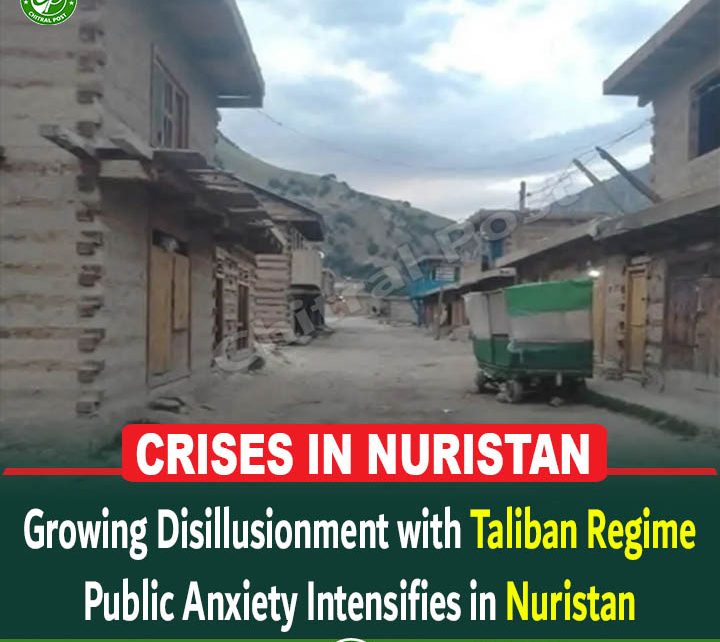
CHITRAL: Due to the lack of seriousness on the part of the Taliban regime in Afghanistan, public hardships are increasing in dozens of valleys of the eastern districts of Barg-e-Matal and Kamdesh in Nuristan province, where thousands of people have been living in miserable conditions for several weeks without access to basic facilities. This situation has further heightened unrest and anxiety in the region.
According to sources, eastern Nuristan has effectively been cut off from the rest of the country, resulting in severe shortages of food, medicines, and healthcare services.
The continued isolation for more than forty days, attributed to the Taliban regime’s indifferent attitude and actions, has worsened the difficulties of the local population, with growing public resentment against government policies.
In February, the Afghan Taliban regime launched an unprovoked attack on Pakistani security forces in the Arandu sector. In response, Pakistani security forces carried out a strong counter-operation, killing more than 10 Afghan fighters on the very first day of fighting, with the bodies of five of them reportedly lying along the border for several days.
After facing setbacks at the hands of Pakistani forces, the Afghan Taliban reportedly began using civilian vehicles for transportation and reinforcement. However, Pakistani security forces restricted their movement along the main highway.
In what sources describe as a panicked response, Afghan forces targeted the civilian population and property in Pakistan’s border area of Arandu, to which Pakistani forces responded effectively. Due to the poor decisions and miscalculations by Afghan forces, the only road linking eastern Nuristan has now been closed.
In recent days, under public pressure, the Governor of Nuristan visited the affected areas via mountainous routes and assured residents that a new road would be constructed from Ghaziabad in Kunar province to restore ground connectivity.
Earlier, authorities had also announced clearing snow to reopen the road to the provincial capital Parun, but those promises have yet to materialize.
Local residents have begun highlighting their hardships on social media, reflecting a visible decline in public confidence in the Taliban government’s performance. Some affected individuals report that they undertook a dangerous 12 to 14-hour mountainous journey to reach the provincial center, Parun, and are now sharing their difficulties before authorities and the international community.
Frustrated by worsening conditions, people in some areas have staged protests, prompting provincial authorities to become active. However, sources say that due to the absence of a free media environment in Afghanistan, along with government pressure and fear of possible reprisals, people are unable to openly express their grievances.
Some local social media users have complained that while the Afghan nation showed solidarity during past natural disasters in other regions, the current crisis in eastern Nuristan is being largely ignored by both the government and the public.
Additionally, some users from Nuristan have pointed to the presence of Pakistani Taliban in the region, claiming that the presence of non-local elements, along with alleged encouragement from authorities, has added to the suffering of the indigenous population.
Furthermore, some users have issued strong warnings that if the situation does not improve, they may consider extreme measures, including the possibility of seeking accession with Pakistan, highlighting the gravity of the crisis.
Social media users from Nuristan also argue that escalating the conflict in the region was a grave mistake by Afghan forces, as the area was relatively peaceful. However, they claim that the Taliban regime’s miscalculations have pushed this peaceful region into conflict, causing severe hardships for the local population.
Local observers believe that even if construction of the proposed road from Ghaziabad begins, it would take several months to complete, and the route would remain difficult and risky.
It is worth noting that following recent border tensions and incidents in the Arandu sector, the key highway connecting Nuristan with Kunar has been disrupted. As a result, not only the local population but also Afghan forces are facing severe logistical challenges, with supply lines badly affected, an outcome being described by some as a major operational setback for them.
Pakistani forces deployed in the Arandu sector, through professional expertise and strategic planning, successfully cut off the supply line of Afghan forces in the mountainous region, forcing them to retreat and suffering heavy losses.